SEVEN Abha opened in the one Saudi city where the weather is the attraction
Author
Doug Merry
Length
Medium
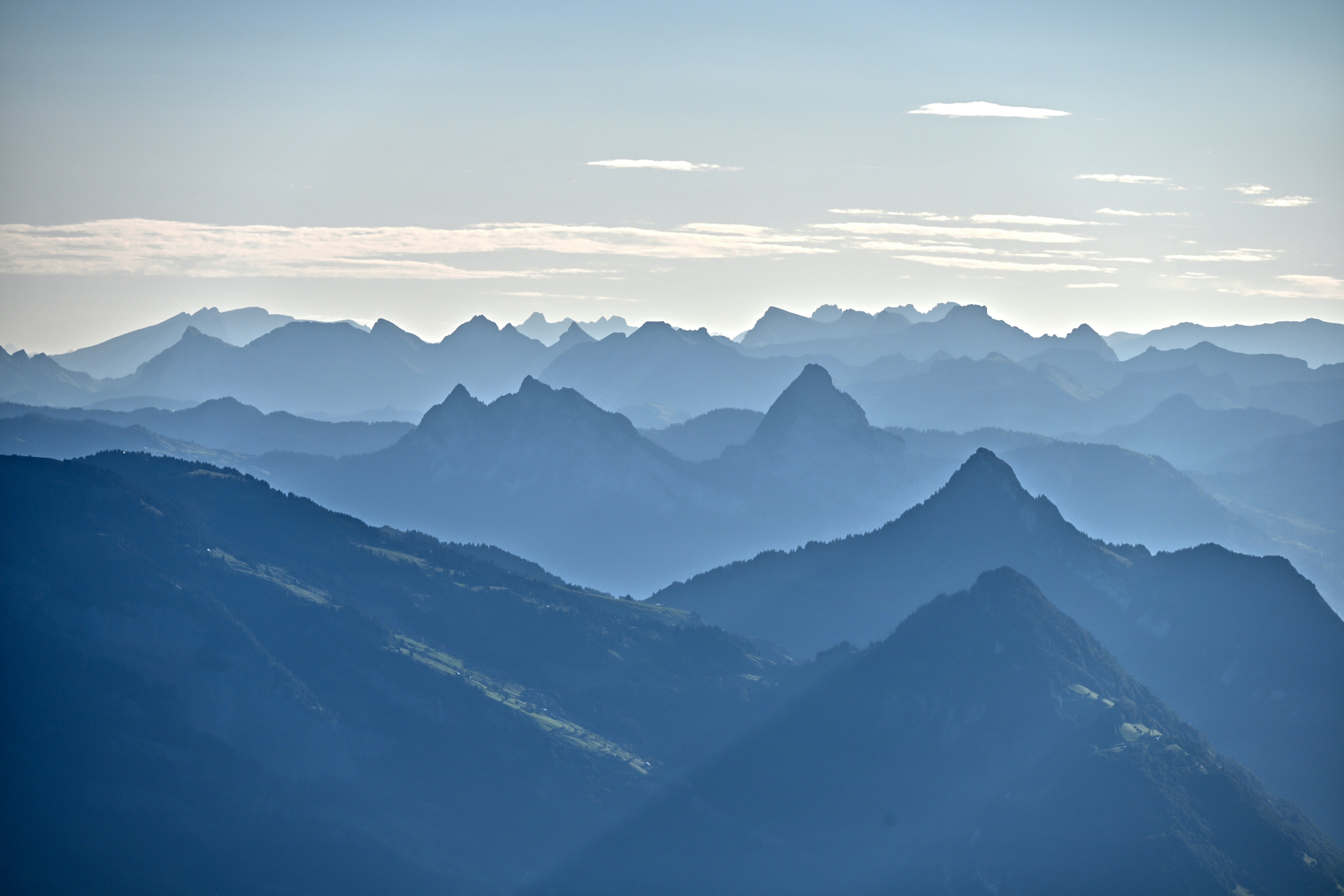
“We are the children of our landscape; it dictates behaviour and even thought in the measure to which we are responsive to it.” — Lawrence Durrell, Justine, 1957
Saudi Arabia’s largest entertainment company opened its first venue in the one city in the kingdom where nobody needs to go indoors.
SEVEN Abha was inaugurated on 5 August 2026 by Prince Turki bin Talal, governor of Asir, and opened to guests the day after. It sits in the cluster around Abha International Airport, covers roughly 64,000 square metres, and holds eight entertainment zones — Formula E Karting, the Kawaken park, GolFi, Cyber Bowling, Scene Cinema. It is the first destination to open out of fourteen planned across thirteen cities, backed by more than SAR 45 billion. The company, Saudi Entertainment Ventures, is wholly owned by Qiddiya Investment Company, which is wholly owned by the Public Investment Fund.
Abha sits at 2,270 metres. Summer highs hover around 28°C. Evenings drop to seventeen. The city is known locally as the bride of the mountain and the city of fog, and it is the one place Saudi families have driven to for generations precisely because they wanted to be outside.
Riyadh, where SEVEN Al Hamra opens later this year, spends August above fifty on the heat index.
So the sequence is backwards. The indoor box opened where the outdoors wins, and the city that would kill for an indoor box in August is still waiting.
The crowd was already on its way
There is a very good reason for it, and it is not a design reason.
The Aseer summer season is targeting more than three million visitors this year. The Sound of Abha festival ran ninety-one days, from 1 June to 31 August, aiming at somewhere between 900,000 and 1.4 million people. Abha airport put close to 1.8 million seats and around 10,000 flights into the season. SEVEN opened on 5 August, which is roughly the middle of all that, and it opened next to the runway those flights land on.
That is not a soft start. That is opening the shop on the busiest street in the country during the busiest week of its year.
It is a sound commercial decision and I would have argued for it too. But a venue that fills during Aseer season has not been tested on demand. It has been tested on capacity. The harder question — can this thing make someone leave the house on a wet Tuesday in February — is still ahead of it, and every one of the other thirteen sites will be asked it much sooner.
I have watched opening weeks flatter buildings that did not deserve it. A room at capacity forgives almost everything: the circulation nobody can follow, the second-floor zone with no reason to climb to it, the bit that was value-engineered in month nine. Crowds fill the gaps, literally. Then you visit the same space out of season, on a normal afternoon with thirty people in it instead of three thousand, and every one of those decisions is suddenly standing there on its own with nothing to hide behind. That afternoon is the real review. It just gets written eight months after everyone has stopped paying attention.
What a rollout can repeat, and what it cannot
Here is the structural problem with fourteen of anything.
Karting repeats. Bowling repeats. A cinema repeats. The licensed content repeats — SEVEN has signed Hot Wheels from Mattel, Transformers and Play-Doh from Hasbro, Discovery Adventures from Warner Bros. Every one of those gets cheaper and faster the second time you build it, and cheaper again the fifth. That is the point of a portfolio, and a genuinely good reason to build fourteen rather than one.
Now look at the other half of what opened in Abha. SEVEN describes the destination as rooted in its setting, and built the launch around Asir’s living legacy: Roots of Aseer, Makers of the Peaks, Taste of Aseer, Aseer Nights. Heritage, local craft, regional food, local performers.
None of that repeats. Not one line of it gets cheaper in Tabuk, or Yanbu, or Madinah, or Kharj. It has to be researched, commissioned and argued for from scratch in every single city, by people who actually know that city, and it will cost roughly the same every time while everything around it is getting cheaper.
That asymmetry is why, on almost every multi-site programme I have seen, the local layer is the first thing to thin out. Nobody decides to cut it. It quietly becomes the item with the weakest business case in the room, somewhere around site nine, and city eleven opens with a mural where city one had a commission.
The arithmetic has already moved once here, in public. When SEVEN joined Qiddiya in May 2024, the stated plan was 21 destinations across 14 cities with investment above SAR 50 billion. The company’s own announcement this month says fourteen destinations across thirteen cities, above SAR 45 billion. No drama, no statement, just a number that changed shape while nobody was looking at it.
The turn
I sat down to write this as a template problem. It is not.
Abha will be fine. Abha will be fine because Asir is doing the heavy lifting — the mountain, the fog, the drive up, the fact that three million people were coming anyway. SEVEN Abha does not have to be a reason to visit Abha. It only has to be a good afternoon inside a trip that already existed.
That is a real advantage and it is completely non-transferable. The mountain does not come to Kharj.
Which means the first site is the one place in the programme where the local layer was optional, and it is the site that got the fullest version of it. Everywhere else, that layer stops being decoration and starts being the entire argument for why anyone would go — because the karting will be identical, and by 2028 there will be somewhere closer.
What to ask for
If you are commissioning anything that is going to exist in more than one place, there is one question worth more than the rest of the brief.
Point at the design and ask which parts of this could only exist here. Not which parts were themed here. Which parts could not be lifted out and dropped into the next city without anyone noticing.
If the honest answer is the carpet and the wall graphics, you have not commissioned a destination. You have commissioned a branch. Branches are a reasonable thing to build and they are profitable, and there is no shame in it. But the mistake is building one and expecting people to travel for it.
SEVEN Abha, in brief
What is SEVEN Abha?
SEVEN Abha is an integrated entertainment destination in the Asir region of Saudi Arabia, covering roughly 64,000 square metres in the cluster around Abha International Airport. It holds eight entertainment zones including Formula E Karting, the Kawaken park, GolFi minigolf, Cyber Bowling and Scene Cinema.
When did SEVEN Abha open?
It was officially inaugurated on 5 August 2026 by Prince Turki bin Talal, governor of Asir, and opened to guests on 6 August, followed by a five-day launch programme built around Asir’s heritage, crafts, food and performers.
Who owns SEVEN, Saudi Entertainment Ventures?
SEVEN is wholly owned by Qiddiya Investment Company, which is itself wholly owned by Saudi Arabia’s Public Investment Fund. Its chairman is Abdullah Al Dawood.
How many SEVEN destinations are planned in Saudi Arabia?
The company’s August 2026 announcement puts the programme at fourteen destinations across thirteen cities, with investment above SAR 45 billion. When SEVEN joined Qiddiya in May 2024, the stated plan was 21 destinations across fourteen cities and more than SAR 50 billion.
Why is Abha a summer destination in Saudi Arabia?
Abha sits at 2,270 metres in the Asir mountains, so summer highs stay near 28°C while much of the kingdom is far hotter. The Aseer summer season is targeting more than three million visitors in 2026, and Abha International Airport scheduled around 10,000 flights and close to 1.8 million seats to serve it.